There are ten books on the 2024 J.W. Dafoe Book Prize longlist and today we’re going to highlight Seeking Social Democracy: Seven Decades in the Fight for Equality (ECW Press).
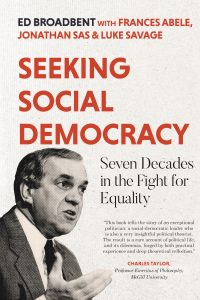
Part memoir, part history, part political manifesto, Seeking Social Democracy offers the first full-length treatment of Ed Broadbent’s ideas and remarkable seven-decade engagement in public life.
In dialogue with three collaborators from different generations, Broadbent leads readers through a life spent fighting for equality in Parliament and beyond: exploring the formation of his social democratic ideals, his engagement on the international stage, and his relationships with historical figures from Pierre Trudeau and Fidel Castro to Tommy Douglas, René Lévesque, and Willy Brandt.
From the formative minority Parliament of 1972–1974 to the contentious national debate over Canada’s constitution to the free trade election of 1988, the book chronicles the life and thought of one of Canada’s most respected political leaders and public intellectuals from his childhood in 1930s Oshawa to the present day. Broadbent’s analysis also points toward the future, offering lessons to a new generation on how principles can inform action and social democracy can look beyond neoliberalism. The result is an engaging, timely, and sweeping analysis of Canadian politics, philosophy, and the nature of democratic leadership.
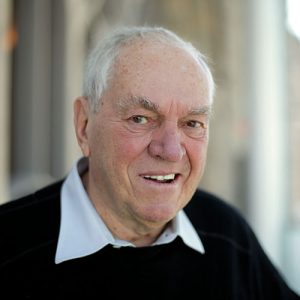
Ed Broadbent PC CC was the leader of Canada’s New Democratic Party from 1975 to 1989 and member of Parliament for Oshawa (1968–1990) and Ottawa Centre (2004–2006).
Before his entry into politics, he taught political theory at York University. He was vice president of the Socialist International from 1979 to 1989 and director of the International Centre for Human Rights and Democratic Development from 1990 to 1996.
In 2011, he was the founding chair of the Broadbent Institute. He was appointed a member of the Privy Council by PrimeMinister Pierre Trudeau in 1982 and in2001 received the highest civilian honour when he was made Companion of the Order of Canada. He is the editor of Dem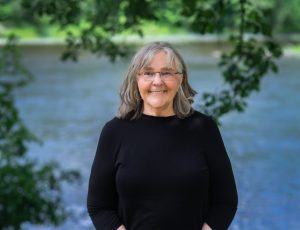 ocratic Inequality: What Went Wrong? and a frequent author of newspaper and magazine opinion articles.
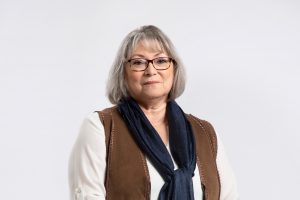
Frances Abele CM is Distinguished Research Professor and Chancellor’s Professor of Public Policy Emerita at Carleton University.
She is a research fellow at the Carleton Centre for Community Innovation and the Broadbent Institute.
Much of her work focuses on Indigenous-Canada relations.
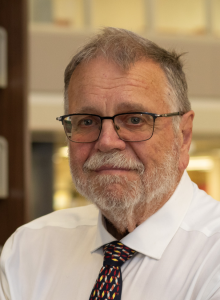
Jonathan Sas has worked in senior policy and political roles in government, think tanks, and the labour movement.
He is an honorary witness to the Truth and Reconciliation Commission.
His writing has appeared in the Toronto Star, National Post, The Tyee, and Maisonneuve Magazine.
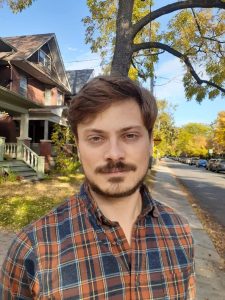
Luke Savage is a writer and journalist whose work has appeared i n The Atlantic, The Guardian, Jacobin, the New Statesman, the Washington Post, Smithsonian Magazine, and theLiterary Review of Canada.
His first book, The Dead Center, was published in 2022.

 In the meantime, here’s more about our jurors!