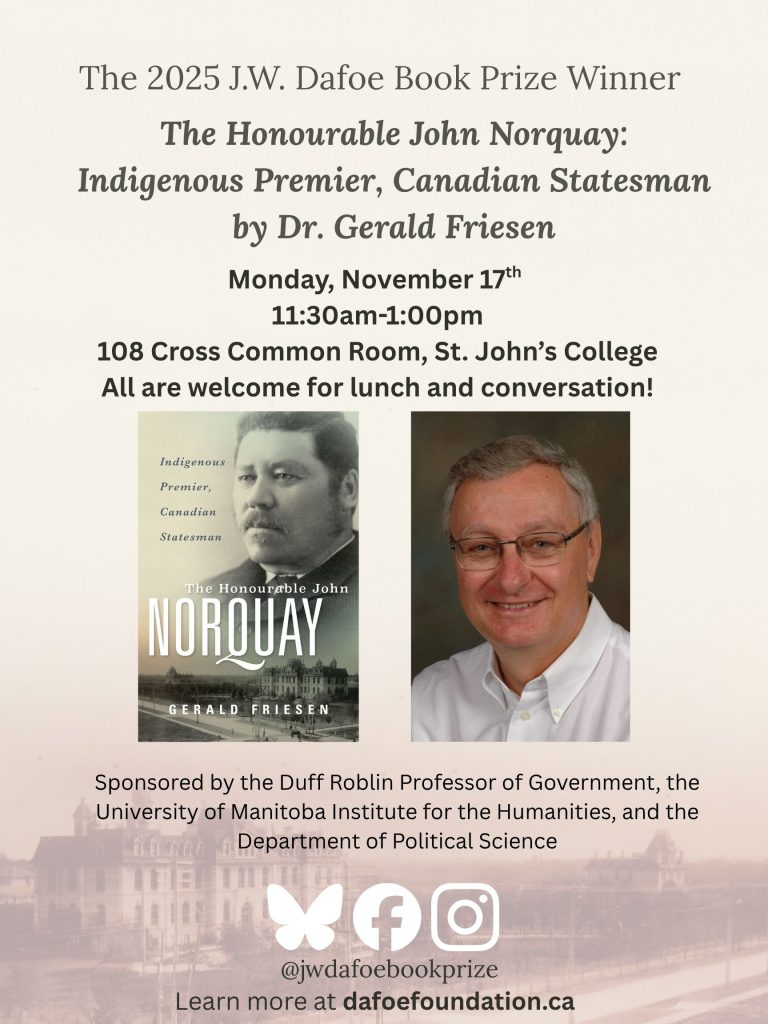
Duff Roblin Professor of Government, University of Manitoba Institute for the Humanities, and Department of Political Studies Present: 2025 J.W. Dafoe Book Prize winner Gerald Friesen!
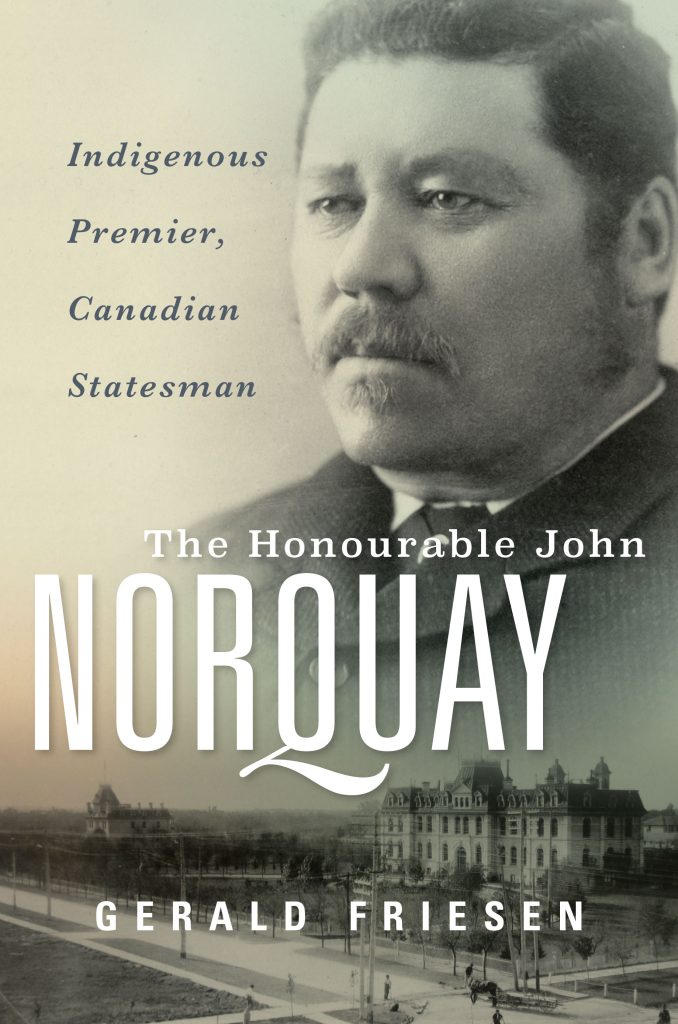
All are welcome to join us on November 17, 11:30 – 1:00 pm, 108 Cross Common Room, in St. John’s College for lunch and conversation on The Honourable John Norquay: Indigenous Premier, Canadian Statesman.
Recounted here by Canadian historian Gerald Friesen, John Norquay’s life story ignites contemporary conversations around the nature of empire and Canada’s own imperial past. This masterful biography of the Premier from Red River sheds welcome light on a neglected historical figure and a tumultuous time for Canada and Manitoba.
Gerald Friesen taught Canadian history at the University of Manitoba from 1970–2011. He has written several books, including The Canadian Prairies: A History and Citizens and Nation, and is co-author of Immigrants in Prairie Cities. Former president of the Canadian Historical Association, he was an advisor on CBC-Radio Canada’s television series Canada: A People’s History.
In addition to the J.W. Dafoe Book Prize, The Honourable John Norquay has won a CLIO History Prize, Manitoba Day Award, and Margaret McWilliams Award.
The jury members of the 2025 J.W. Dafoe Book Prize — Dr. Dale Barbour, Dr. Gregory Mason, and Patricia Bovey — selected The Honourable John Norquay by Gerald Friesen as this year’s winner, but wanted to commend the shortlisted titles.
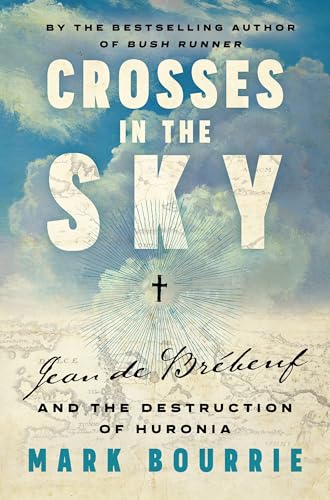
Mark Bourrie,Crosses in the Sky: Jean de Brébeuf and the Destruction of Huronia
Jean de Brébeuf has long haunted Canadian history. He was a Jesuit missionary serving in Huronia when the Haudenosaunee overwhelmed the territory in 1649, dispersed the Huron, and martyred Brébeuf. Bourrie’s contribution to that story is to give us a wonderful context for the historical period, the Jesuit community, and Brébeuf himself. We’re left with a sense of the flaws and ambitions of the Jesuits and the understanding that Brébeuf was exactly where he thought he should be in 1649.
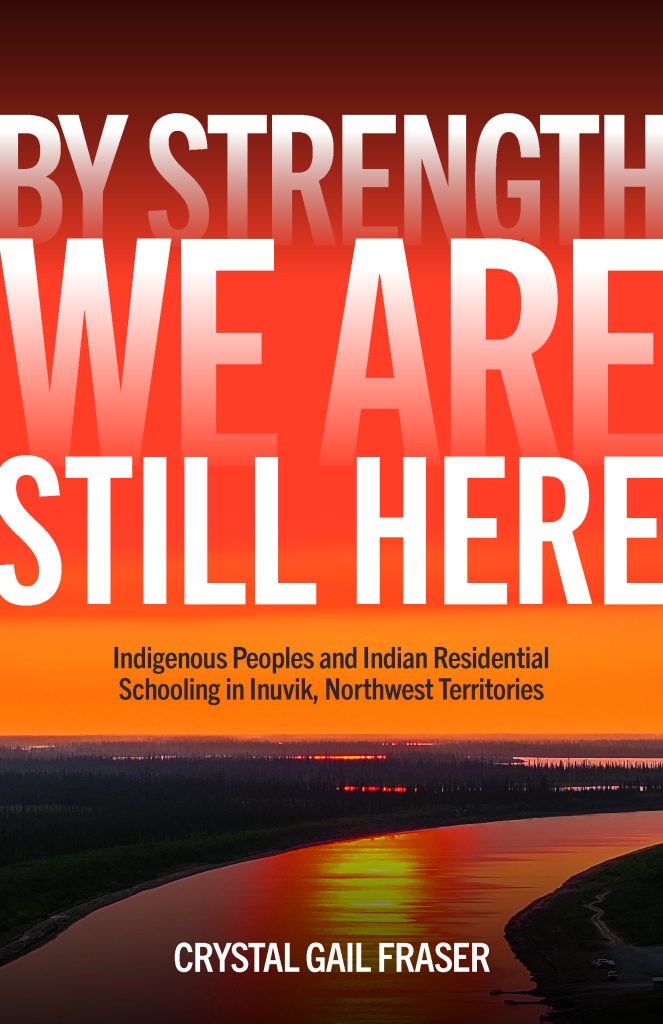
Crystal Gail Fraser, By Strength, We are Still Here: Indigenous Peoples and Indian Residential Schooling in Inuvik, Northwest Territories
Fraser takes us into the messy reality of Inuvik’s residential schools in the 1970s and 1980s. It describes how parents asserted control and pushed back against the attempts by the residential school system to bend Inuit families to adopt an alien way of life. This well-written book is an essential addition to the literature on residential schools.
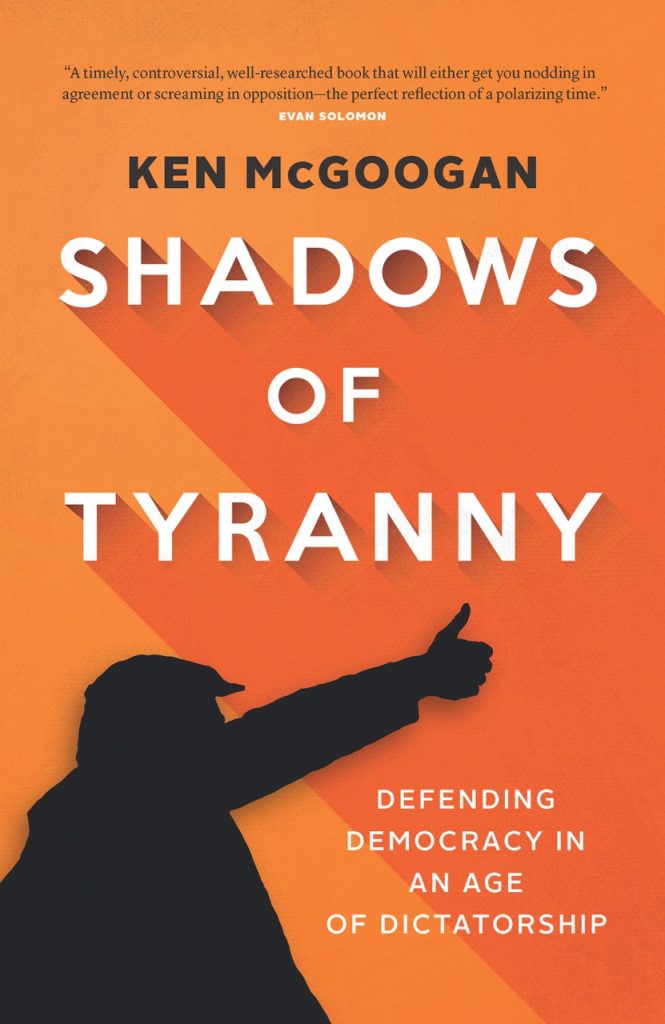
Ken McGoogan,Shadows of Tyranny
This is a great read. Using short stories of many who oppose tyranny and dictatorship. McGoogan uses his historiographical lens to illustrate politicians, poets and others who fought for democracy. He starts and ends with Trump, and without proselytizing, he creates a case for how to defend democracy.
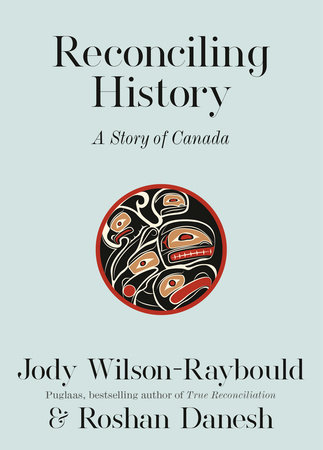
Jody Wilson-Raybouldand Roshan Danesh, Reconciling History: A Story of Canada
Think of Reconciling History: A Story of Canada as telling the history of Canadian colonialism in its own words. Wilson-Raybould and Danesh pull together a narrative of voices and quotes that walk us through the collision of cultures over the centuries and in so doing they demonstrate how colonial figures talked past and around Indigenous people as they layered Canada over North America and how Indigenous figures consistently spoke back, creating a counter-narrative that has too long been ignored.
The J.W. Dafoe Foundation is proud to announce that Gerald Friesen has won the $12,000 John Wesley Dafoe Book Prize for The Honourable John Norquay, published by the University of Manitoba Press!
Our jury described the winning title as: “Friesen’s writing is incredible. He has the ability to weave narrative and context together without overwhelming the reader. He drops us into the hybrid Red River valley culture of the nineteenth century and takes us on a journey as John Norquay attempts to manage the region’s transformation into a Canadian province. This outstanding biography reveals a man of high intelligence and dogged determination who participated in the forming of confederation.”
“Friesen has forced future histories of Manitoba and Canada to include Norquay as one the genuine founders of our country.”
The J.W. Dafoe Foundation thanks this year’s dedicated jury members, Dale Barbour, Gregory Mason, and Patricia Bovey, for their service to the J.W. Dafoe Foundation and their selection of The Honourable John Norquay for the 2025 J.W. Dafoe Book Prize.
The J.W. Dafoe Book Prize, worth $12,000, will be formally awarded later this fall at the J.W. Dafoe Foundation’s Book Prize Event. Details to come soon.
The Prize is one of the richest book awards in Canada for excellence in non-fiction, with a focus on major subjects involving Canada, the West, and Canadians, as well as the Canadian nation in international affairs.
It memorializes John Wesley Dafoe, one of the most significant Canadian newspaper editors of the 20th century. During his tenure at the Manitoba Free Press, later renamed the Winnipeg Free Press, from 1901-1944, Dafoe was known for his advocacy of western development, free trade, national independence, and the British Commonwealth.
The Foundation’s activities also support a $10,000 fellowship for M.A. students pursuing studies in international relations, international conflict resolution, economics, history, law or politics at the University of Manitoba; a $1,000 writing award for Manitoba post-secondary students; the annual J.W. Dafoe Political Studies Students’ Conference (PSSC); a prize for student and community newspaper writers established in partnership with the Winnipeg Press Club; and a number of colloquia on Canada in international affairs.
To help break down the silos between the stories that we tell… about ourselves, about each other, and most specifically about this complex, challenging yet beautiful country we call Canada.
Was there a book or piece of writing that made you want to pursue writing as a career? What was it?
Writing is not either of our careers. Writing is something we both recognized can be a potent and impactful and meaningful vehicle for advancing shifts in public discourses and social consciousness, alongside other efforts and striving.
Who/what were your influences while writing this book?
The greatest influence were the Canadians we have met from coast to coast to coast who expressed a yearning for a revitalized understanding of Canada’s history that can help shape their efforts to build the Canada of tomorrow.
What is one thing you learned while writing this book you wish everyone knew?
That the voices of the past act as a mirror to the challenges of this present moment in time in every more clear and powerful ways.
Tell me a bit about why writing about Canada/Canadians is important to you?
The world is crying out for examples of peoples and places where justice and harmony in contexts of diversity and difference are upheld and embraced. Canada, with all of our advantages, capacities, and strength needs to be that example that the world so sorely needs.
I wanted to tell a story about a disastrous – probably the most destructive – example of Indigenous-European contact, one that was already famous as a heroic narrative, and explore the motivations of all the people involved. Telling this story was, I believe, a good way of explaining how all sides entered an Indigenous-European partnership, and how these new relationships often had unforeseen catastrophic consequences. Almost always, these consequences were suffered by Indigenous people.
Was there a book or piece of writing that made you want to pursue writing as a career? What was it?
I am a life-long reader. I was raised in a home where history was important. My dad took university courses starting when I was about 12 and I would read all the books. We lived in a tourist area near Collingwood, and there was a lot of time when there weren’t many kids around. It was quite a while later when I realized I might actually be able to write books.
Who or what were your influences while writing this book?
This is the first book that explores some of the intertwining of my own family with a historical event.One of Champlain’s young interpreters, Nicolas Marsolet, one of my ancestors, got into a dispute with Champlain and Brebeuf, documented with some hostility by the Jesuits in the 1630s, about the way Champlain treated young Indigenous girls. To my great relief, Marsolet took the right side of the argument. One of my great uncles supposedly used a miracle to find the site of Brebeuf’s death. Another great-uncle built the interior of the Martyrs’ Shrine. My great-great grandfather actually bought part of the site of the Jesuit mission ruins more than a century ago, and as a teenager, I was a friend of the archaeologist who excavated the site.
What is one thing you learned while writing this book you wish everyone knew?
People can have good intentions and may honestly want to help people but are so blinded by their own ideologies and cultural norms that they fail to see the damage they do to people who see the world differently. They may be very kind people with good hearts, but they need to respect the beliefs and practices of those they want to help. We still see this in what we think of as developing countries.
Tell me a bit about why writing about Canada/Canadians is important to you?
A sense of self and place is important to me, and, I believe, to many readers. Canada is more like a continent than a country. It is very complex. Its history is complicated and nuanced. And it’s very different from the story of the United States and every other country. If we are to survive as a country, fending off the influence and threats of the United States and overcoming the internal forces of division, we need to understand how we got to the place where we are. History – more accurately, pseudohistory – has also become an important weapon in the ideological and cultural fights within Canada. When people do use Canadian history to try to make some kind of point, they need to know what they’re talking about, and they must have access to good source material.
What was your goal while writing this book? I wanted to make a case for Norquay’s importance in the first decades after Confederation and for the relevance of his thinking and of his example today.
Was there a book or piece of writing that made you want to pursue writing as a career? What was it? I read a lot during my elementary school years. Books on sports and several mystery series stand out in my memory, as does a book of humour that I thought was amazingly funny when I was nine years old.
Who or what were your influences while writing this book? During my childhood and teen years in Prince Albert I studied, played, and worked with First Nation and Métis people. In the fifty-plus years I’ve lived in Winnipeg, I have worked with many people in Manitoba schools, in the trade union movement, and in government. My wife sat in the legislature for thirteen stressful years which offered insights into the complicated business of politics. These were influences I could see while I was writing. I wanted to express respect for Indigenous activism, to acknowledge the commitment of civil servants, union leaders, teachers, and political representatives, and to reveal a little of the intellectual challenges and partisan realities that shaped the electoral fortunes and fate of this one good person, John Norquay.
What is one thing you learned while writing this book you wish everyone knew? Norquay’s vision of Canada differed from the thinking of those few among his contemporaries who are remembered and celebrated today. He expressed an ideal of bilingual and multicultural citizenship, he insisted that First Nations and English and French Métis were equal in status to other citizens, and he campaigned for a rebalancing of national and provincial powers within the Canadian federation. His perspective was just as worthy as the Ontario “national” vision represented by John A. Macdonald.
Tell me a bit about why writing about Canada/Canadians is important to you? Each of us belongs to many communities, from the very local to the global and universal. I believe (I know not everyone shares this view), that the nation-state is one of the most important of these communities because of its power to impose limits and open possibilities for us all. If our nation-state, Canada, is to function well, citizens have to find the means to express their own views and interests while learning to respect others’ views and interests. They have to argue more or less amicably, even when they disagree vehemently. I want to live in a democracy where discussion is encouraged, and group decisions are reached fairly. And I believe that a history book can tackle significant public matters in the past – Indigeneity, Prairieness, business strategy, and election campaigns, in the case of the Norquay biography – while offering a useful perspective on our lives today.
The John Wesley Dafoe Foundation is once again pleased to receive submissions for its annual
Book Prize. The 2025 J.W. Dafoe Book Prize, valued at $12,000, will be awarded to a
publication with a 2024 imprint “. . . for distinguished writing by Canadians, or authors resident
in Canada, that contributes to the understanding of Canada, Canadians, and/or Canada’s place in
the world.” Co- or multiple authored books are eligible, but not edited books consisting of chapters
from many different authors.
A nominal submission fee of $50 per entry is required. To nominate a book(s), publishers and
individuals:
1) 2) Submit four copies of each book nominated;
Provide the appropriate submission fee ($50 per title) in cheque form payable to the J.W.
Dafoe Foundation;
3) Send books and fees to Dr. Andrea Rounce, Honorary Secretary, The J.W. Dafoe
Foundation, c/o 220 Dysart Road, Room 442 University College Building, University of
Manitoba, Winnipeg, MB R3T 2M8;
4) Meet deadline of Monday December 16, 2024. Please note that late entries for books
published in the later months of 2024 will be accepted into early 2025, as long as we are
advised that they are being submitted; and
5) Send an email with the publisher’s contact information (name/email/phone number) and
the book title(s) being nominated to Dr. Andrea Rounce at andrea(dot)rounce(at)umanitoba(dot)ca
6) You will be notified when the title(s) submitted and payment have been received.
The John Wesley Dafoe Foundation is once again pleased to receive submissions for its annual Book Prize. The 2024 J.W. Dafoe Book Prize, now valued at $12,000, will be awarded to a publication with a 2023 imprint “. . . for distinguished writing by Canadians, or authors resident in Canada, that contributes to the understanding of Canada, Canadians, and/or Canada’s place in the world.” Co- or multiple authored books are eligible, but not edited books consisting of chapters from many different authors.
A nominal submission fee of $50 per entry is required. To nominate a book(s), publishers and individuals:
Submit four copies of each book nominated;
Provide the appropriate submission fee ($50 per title) in cheque form payable to the J.W. Dafoe Foundation;
Send books and fees to Dr. Andrea Rounce, Honorary Secretary, The J.W. Dafoe Foundation, c/o 20 Dysart Road, Room 442 University College Building, University of Manitoba, Winnipeg, MB R3T 2M8;
Meet deadline of Friday December 15, 2023. Please note that late entries for books published in the later months of 2023 will be accepted into early 2024, as long as we are advised that they are coming; and
Send an email with the publisher’s contact information (name/email/phone number) and the book title(s) being nominated to Dr. Andrea Rounce
You will be notified when the title(s) submitted have been received.
Formal announcement of the short list will happen in spring 2024, followed by the announcement of the winner. The Prize will be formally awarded to the author(s) at the Annual J.W. Dafoe Book Prize dinner.
Valley of the Birdtail: An Indian Reserve, a White Town, and the Road to Reconciliation by Andrew Stobo Sniderman and Douglas Sanderson (Amo Binashii) win the $12,000
J.W. Dafoe Book Prize for 2023
Andrew Stobo Sniderman and Douglas Sanderson (Amo Binashii) have won the 2023 John Wesley Dafoe Book Prize for Valley of the Birdtail: An Indian Reserve, a White Town, and the Road to Reconciliation published by HarperCollins Publishing Ltd.
Andrew Stobo Sniderman and Douglas Sanderson (Amo Binashii)’s work is the unanimous choice of this year’s jury. Jury Chair Mary Agnes Welch describes the winning book this way: “Valley of the Birdtail is the most clear-eyed and compassionate book on the legacy of Indigenous inequality I’ve read. It’s maddening in parts, wryly funny in other parts, and its vivid characters – prairie Canadians will recognize them all – bring the complex national issue of white supremacy right down to John Dafoe’s backyard.”
The Prize will be formally awarded at the J.W. Dafoe Foundation’s Book Prize Event this fall in Winnipeg. The J.W. Dafoe Foundation thanks this year’s dedicated jury members, Dr. Dale Barbour, Dr. Gregory Mason, and Ms. Mary Agnes Welch, for their service to the J.W. Dafoe Foundation and their selection of Valley of the Birdtail for the 2023 J.W. Dafoe Book Prize.
Joan Scottie, Warren Bernauer, and Jack Hicks. I Will Live for Both of Us: A History of Colonialism, Uranium Mining, and Inuit Resistance. University of Manitoba Press.
Andrew Stobo Sniderman and Douglas Sanderson. Valley of the Birdtail: An Indian Reserve, a White Town, and the Road to Reconciliation. Harper Collins Publishers.
The winner will be named in late April and invited to give a talk in Winnipeg to the community in Fall 2023. Details will follow.
The John W. Dafoe Book Prize memorializes John Wesley Dafoe, one of the most significant Canadian editors of the 20th century. A value of $12,000, it is one of the richest book awards in Canada for non-fiction excellence. Selection criteria include subjects involving Canada, Canadians, and the Canadian nation in international affairs. During his tenure at the Manitoba Free Press, later renamed the Winnipeg Free Press, from 1901-1944, Dafoe was known for his advocacy of western development, free trade, and national independence. His case for Britain’s adoption of the Statute of Westminster in 1931 helped to create the eight dominions which became the nucleus of the present 56-nation Commonwealth.
The J.W. Dafoe Foundation’s activities also support $10,000 in fellowships for MA students pursuing studies in international relations, politics, economics or history at the University of Manitoba; an essay prize for qualifying students; a prize for student and community newspaper writers; the J.W. Dafoe Political Studies Students’ Conference; and a number of colloquia on Canada in international affairs.