

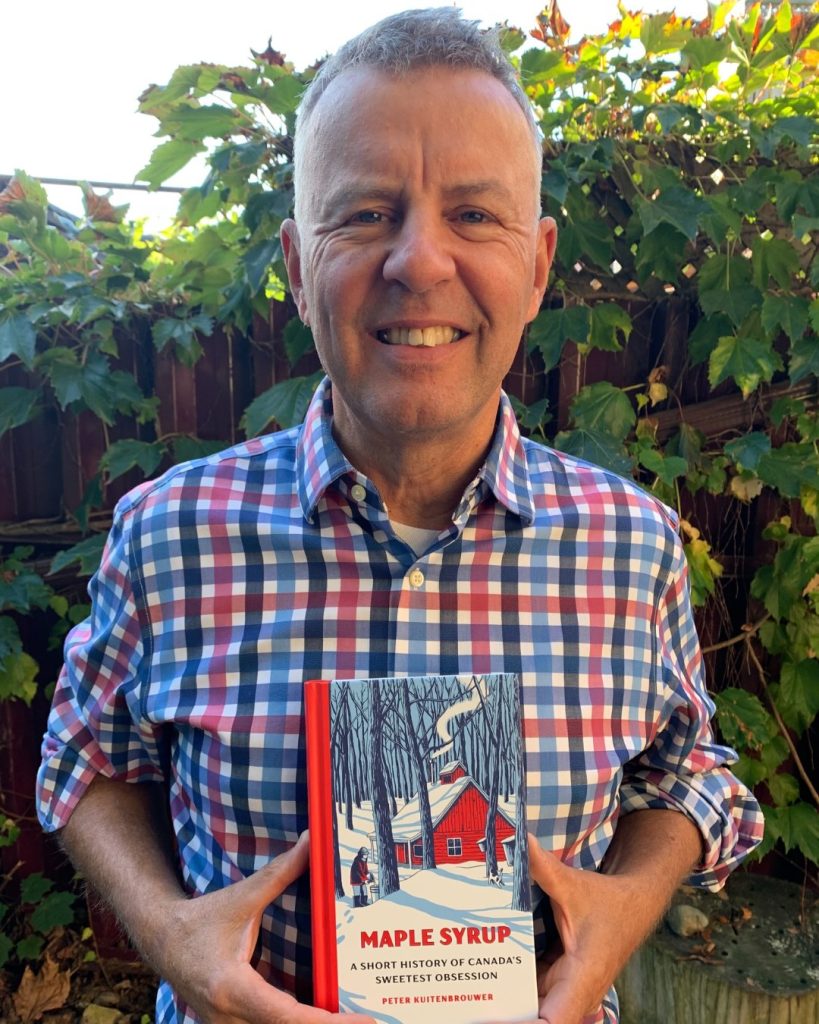
What was your goal while writing this book?
Maple syrup is a touchstone of Canada. And yet, nobody until now had thought to write a history of our national elixir. The story of the condiment is a long and winding saga, from its origins as a key component of First Nations diet, all the way through to the industrialization of maple syrup and the creation of a Quebec maple syrup cartel that controls the global supply of maple syrup and the price.
Another goal was to tell a more personal story of how maple syrup saved me as a child; that is, to describe how the herculean effort of our immigrant family to extract a sweetener from our vast and mysterious sugar bush built in me resilience and pride.
Is there a book or piece of writing that made you want to pursue writing as a career?
What was it?
I grew up on a dirt road on a farm in Quebec with no television, and winter lasted most of the year. So books were our only means of escape. Early influences include Dr. Seuss, Maurice Sendak and Laura Ingalls Wilder. When I got older I devoured Ernest Hemingway, Truman Capote and J.D. Salinger.
Why is writing about Canada/Canadians important to you?
Canada lives in the shadow of our powerful neighbour—the United States— to so great an extent that probably more of us have heard about Paul Revere than Laura Secord. Canadians have an urgent need, which is even more powerful in the era of bellicose American imperialism, to tell our own stories and build our national identity. The history of Canada is filled with tales of strength, resilience and, yes, tragedy. Our unfinished national project, badly tarnished by the brutal record of settler oppression of the First Peoples, needs storytellers to make sense of the journey and to instill in everyone understanding of our past and pride in the great nation that we are forever becoming.