I wanted to examine the threats facing one of Canada’s most important fisheries. I hope it helps people understand how climate change and overfishing have pushed lobster into dangerous territory, and what’s at stake for those who depend on the sea for a living.
Was there a book or piece of writing that made you want to pursue writing as a career? What was it?
I was a teenager when Mark Kurlansky’s book on the collapse of the cod fishery came out. It changed how I thought about long-form journalism and how a story about a single species of fish could become a sweeping explanation of world history.
Why is writing about Canada/Canadians important to you?
I think it’s more important than ever that we tell Canadian stories. These stories challenge myths about our country, shape our national identity, and help us understand our place in an ever-changing world
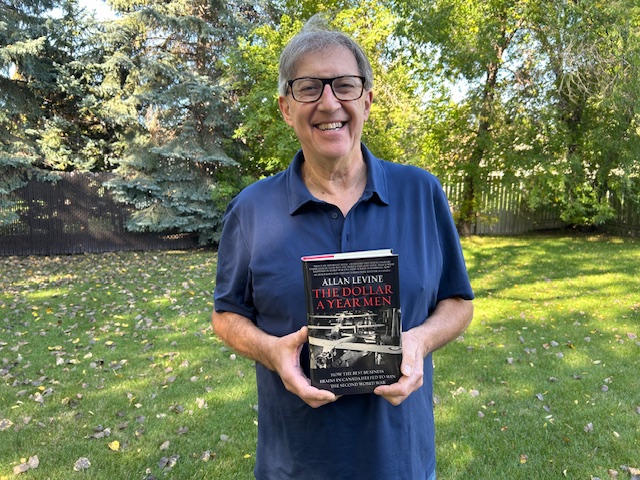
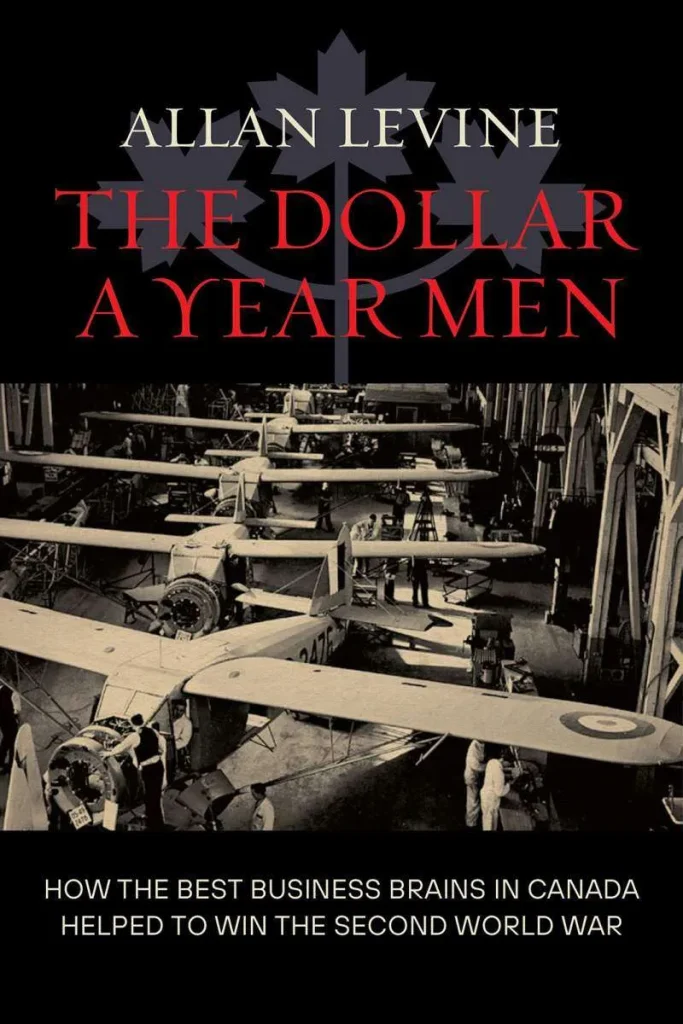
What was your goal while writing this book? I knew very little about the dollar-a-year men, the Canadian businessmen who volunteered or were recruited by C.D. Howe and other officials of the Mackenzie King government during the Second World War to oversee the country’s wartime industry. It was my publisher Sarah Scott of Barlow Books, whose grandfather, Douglas Ambridge was one of these men, who introduced me more fully to the story. While there have been many books published about Canada’s involvement in World War II, I learned that there were only passing references to the dollar-a-year men and—with the exception of a master’s thesis written in 2013—no book about them and their endeavours. With Sarah’s encouragement, I delved into this fascinating story and knew immediately that it had to be told. My main goal was to bring the history of these individuals and their remarkable service to a wide audience, a story set against the larger narrative of Canada during the war. How did a country, which in 1939 had a small navy, no real air manufacturing and armaments production industries become in less than five years the fourth-largest industrial power in the world? That is what I set out to answer.
Was there a book or piece of writing that made you want to pursue writing as a career? What was it?
Many (many) years ago when I was a graduate student at the University of Toronto, I was inspired by the work of both academic historians such as J.M.S. Careless, who served as my adviser on my doctoral dissertation, and Michael Bliss, as well as by popular historians such as Pierre Berton and Peter C. Newman, who I worked closely with in researching his trilogy on the history of the Hudson’s Bay Company, the first of several book projects that I assisted him with. I was determined that like both the academics and the popular writers, I could write history that was based on solid research, yet written in an engaging style that attracted many readers. That objective has guided my writing career for the past four decades. Hence, my models were such books as the two-volume biography, George Brown of the Globe by Prof. Careless; The Discovery of Insulin by Michael Bliss; The National Dream and The Last Spike, Pierre Berton’s two volume history of the CPR; and Renegade in Power about the rise and fall of John Diefenbaker and the three-volume history of the HBC by Peter C. Newman.
Why is writing about Canada/Canadians important to you? We live in a complicated world, one in which Canada—its history, culture and society— often has been overshadowed by the United States. My interest in Canada dates back to high school and the Canadian history course I took in Grade 11. That piqued my interest and convinced me that the country’s history, its people and events over many centuries, was significant and stood on its own. My studies after that at university and beyond have only strengthened that view. Recently, as the country has faced economic pressures and even threats from certain American politicians, it is even more essential that Canadians continue to research and write about their own history, good and bad, to fully understand our place in the world now and in the future.
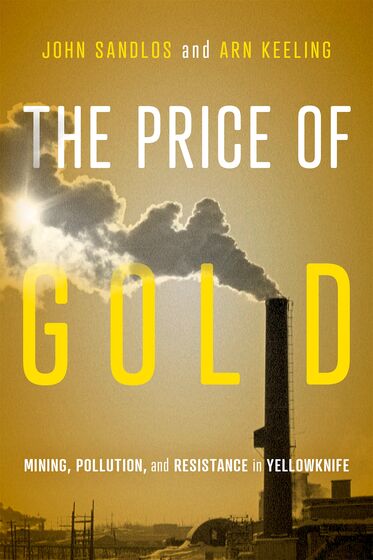
Arn Keeling: The book was really intended to summarize our decade-plus historical research on the history and legacy of Giant Mine. While the story is well-known to many people in Yellowknife, it’s an important one for all Canadians to know about, since it is all of Canada that will be paying for the remediation and perpetual care of the site. Although the story of arsenic pollution at Giant Mine is a very local one, we thought it deserved book-length treatment as a powerful warning about the long term environmental costs of resource development, an illustration of the connections between pollution and colonialism, and a testament to Indigenous resistance to extractive development and pollution on their lands.
Was there a book or piece of writing that made you want to pursue writing as a career? What was it?
Arn Keeling: Reading and writing was always exciting to me—I initially aimed to become a journalist and environmental writer, but ended up on the academic track. I love fiction, but have a particular attraction to great non-fiction writers like John McPhee or, more recently, Robert Macfarlane.
John Sandlos: I was exposed to a huge variety of environmental writing in graduate school, but became especially attracted to environmental history because of the clarity and conviction of so many writers in the field. I was inspired first by Willliam Cronon’s seminal work, Changes in the Land, a masterful account of the environmental history of colonialism in New England. Robert Gottlieb’s, Forcing the Spring, opened me up to the importance of local, grassroots enviormental struggles, a huge influence on the way we approached The Price of Gold.
Why is writing about Canada/Canadians important to you?
Arn Keeling: As a historical geographer of Canada, I think it’s crucial to tell truthful stories about this country if we want to continue living together—both the good and the bad. In fact, I find there is much as much heroism and insight into Canada from our difficult stories, which the Giant Mine story exemplifies in showing how the Yellowknives Dene and local mine workers collaborated to tackle the poisoning of their community.
John Sandlos: For most of its history, Canada has staked its economic future on primary resource development of one sort or another. For a citizenry whose population is huddled in the southern latitudes, too often the environmental impacts of resource extraction are hidden from view. Without denying that resource extraction is a critical provider of jobs and economic activity, my goal as a writer is to reveal the vast environmental costs that have accompanied resource development, along with the very direct impacts of extractivism on northern Indigenous communities. Ultimately, I hope my work inspires readers to grapple with the difficult questions that accompany almost any large-scale form of resource extraction.
My original goal was to reveal the stories of people Canada welcomes into our country to work but who we don’t welcome to stay. Early on in the research, however, I realized that the book had as much to say about who we are as a nation. The portrait isn’t flattering.
Was there a book or piece of writing that made you want to pursue writing as a career? What was it?
I remember reading Lewis Thomas’ science essays when I was in high school. They taught me that you could make something personal and beautiful out of something totally nerdy. This was a revelation.
Why is writing about Canada/Canadians important to you?
If Canadians want to live up our self-image as a welcoming and benevolent nation, we must acknowledge when and how we fail to do so.
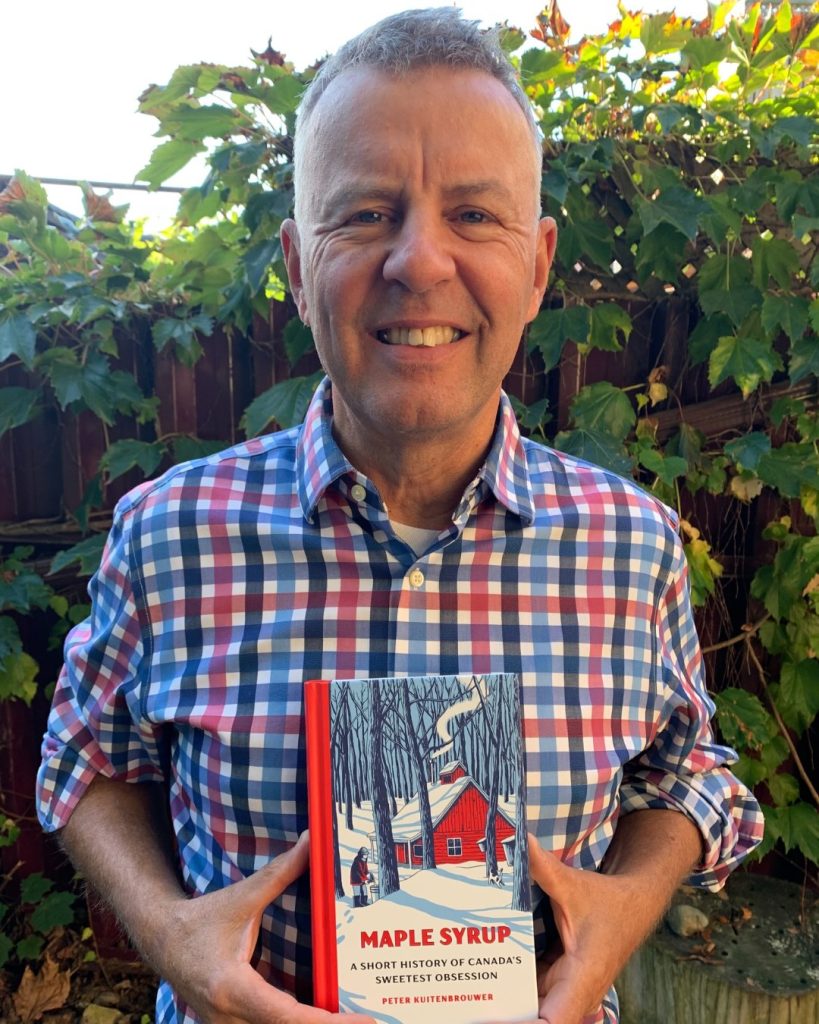
Maple syrup is a touchstone of Canada. And yet, nobody until now had thought to write a history of our national elixir. The story of the condiment is a long and winding saga, from its origins as a key component of First Nations diet, all the way through to the industrialization of maple syrup and the creation of a Quebec maple syrup cartel that controls the global supply of maple syrup and the price.
Another goal was to tell a more personal story of how maple syrup saved me as a child; that is, to describe how the herculean effort of our immigrant family to extract a sweetener from our vast and mysterious sugar bush built in me resilience and pride.
Is there a book or piece of writing that made you want to pursue writing as a career?
What was it?
I grew up on a dirt road on a farm in Quebec with no television, and winter lasted most of the year. So books were our only means of escape. Early influences include Dr. Seuss, Maurice Sendak and Laura Ingalls Wilder. When I got older I devoured Ernest Hemingway, Truman Capote and J.D. Salinger.
Why is writing about Canada/Canadians important to you?
Canada lives in the shadow of our powerful neighbour—the United States— to so great an extent that probably more of us have heard about Paul Revere than Laura Secord. Canadians have an urgent need, which is even more powerful in the era of bellicose American imperialism, to tell our own stories and build our national identity. The history of Canada is filled with tales of strength, resilience and, yes, tragedy. Our unfinished national project, badly tarnished by the brutal record of settler oppression of the First Peoples, needs storytellers to make sense of the journey and to instill in everyone understanding of our past and pride in the great nation that we are forever becoming.
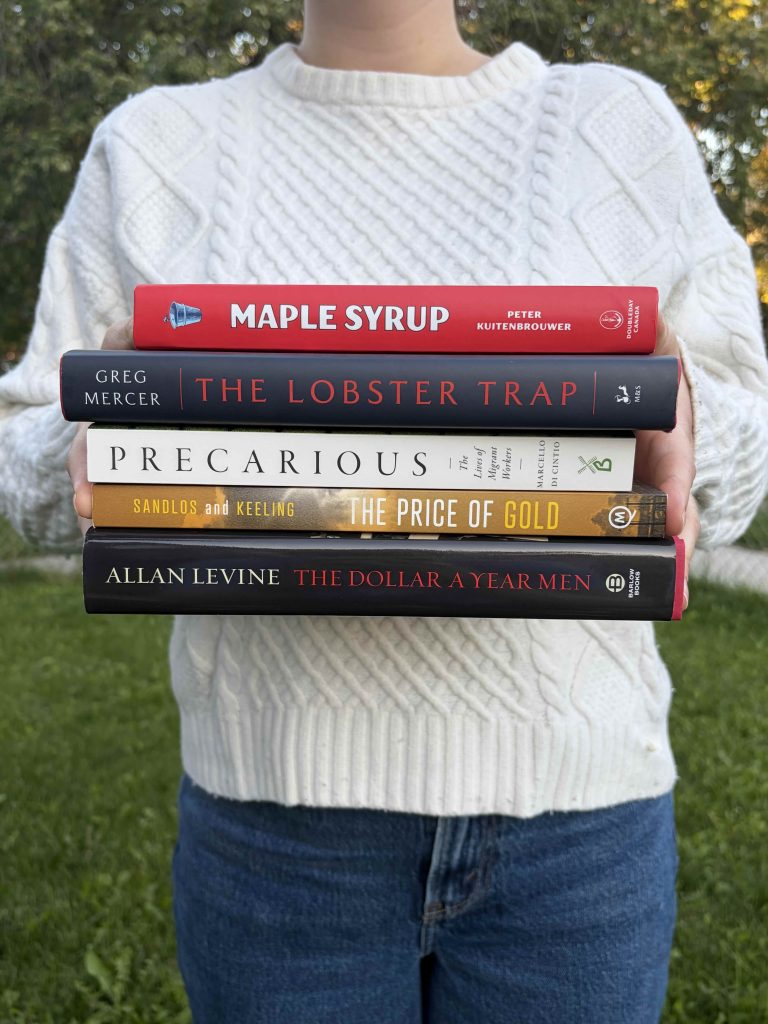
We’ll be announcing the winner on October 13th. Until then, we will be highlighting each remarkable title and sharing a Q&A with the author. Follow along to get to know more about who wrote your favourite book!
Fifty years of gold mining at Yellowknife in the Northwest Territories spurred northern settlement and produced millions of dollars in profits. But mineral processing also had catastrophic environmental effects and left a troubled legacy.
When two mining companies in Yellowknife began processing gold ore in the 1940s, they did so with little or no pollution controls. Giant Mine spewed thousands of kilograms of arsenic trioxide from its roaster stack into the environment, causing illness and death among people and animals, especially in the adjacent Yellowknives Dene community. Even after the companies installed controls, arsenic trioxide continued to enter the atmosphere and waterways. Eventually Giant Mine, the biggest polluter, would deposit the arsenic dust beneath the mine, leaving 237,000 tonnes of highly toxic material buried underground. For decades, the mining companies and the federal government hid the worst effects of the pollution, doubted their own studies, and resisted calls for action. Yet the Yellowknives Dene fought back with the support of labour unions and environmental groups, questioning the safety of the air and water in their community and the massive toxic deposit underground.
The Price of Gold traces the troubling history of one of Canada’s most contaminated sites but also the inspiring story of Indigenous, labour, and environmental activists who resisted the ongoing poisoning of their communities.
“Who was the woman trying to convince a jury in a tiny courthouse in Nova Scotia that it was self-defense when she killed her partner; and who was the young woman walking into the palais de justice in small-town Quebec arguing that it was her choice, not his, to have an abortion? What was it that pushed these women on, even when the lawyers said it was hopeless?”
Karin Wells once again pulls us into the lives—and this time, the legal trials—of a group of women integral to the advancement of women’s rights in Canada. Eliza Campbell, Chantale Daigle, Jeannette Corbiere Lavell—these Women Who Woke Up the Law often had no idea what they were facing in the courts, or the price they would have to pay. Some never saw justice themselves, but they left a legal legacy. Their bold determination is something we need now more than ever to guard the hard-won gains in women’s rights.
When Canada went to war in 1939, the goal was to provide the British with the ships, planes, and weapons that it desperately needed to defend their island against Nazi Germany. But at the time, Canada had little to offer in terms of military hardware.
That was when Canada recruited top business leaders to take charge. In six years, they turned Canada into one of the greatest military powers in the world. They helped to win the war, and in the process they turned Canada’s economy into a modern industrial one. What’s more, they served the country for a dollar a year, or even nothing. This is an inspiring and patriotic story for Canadians in a time of crisis.
Lobster has been a phenomenal success story, with a commercial fishery that has generated enormous wealth and fuelled appetites for one of the world’s most recognizable luxury foods. The great lobster boom that began in the 1990s has also led to violent fights over who has the right to catch this valuable seafood, including many Indigenous people in Canada, who until recently have been excluded from this industry. Now overfishing, trade wars, and climate change are threatening the future of this fishery in deeply troubling ways.
By 2050, scientists expect that warming ocean waters in the heart of North America’s lobster fishing region will cut catches by two thirds. In some parts of America, there’s hardly any lobster left to catch. Unlike previous collapses, there are few other large-scale wild seafood species left that fishing crews can switch to. The economic upheaval for fishermen and seafood companies alike could devastate coastal communities in both Canada and the United States.
In this deeply reported, resonant, timely book, Greg Mercer takes readers on a fascinating global journey and inside this precarious moment for the lobster industry, to show the money and heartache, and the danger and violence, tied up in it. Along the way, he explores lobster’s remarkable history, the gold-rush mentality that surrounds it, and examines the looming crisis for this most precious shellfish.